
Pleasanton CA Housing Market Update — June 2026 (Median, DOM, Inventory)
Pleasanton CA Housing Market Update — June 2026 New Title
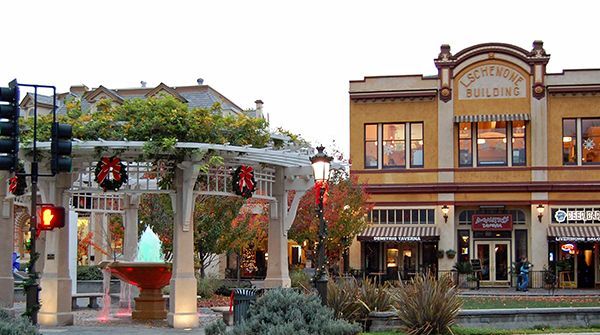
Walk Main Street on a Saturday and it's the same scene it's been for years: the tables at the outdoor cafés fill up before the morning is half over, kids from Amador Valley High are everywhere, and the line at the farmers market stretches back toward the parking lot. Whatever is happening with the broader real estate market, Pleasanton still draws people the way it always has — and that underlying demand keeps showing up in the data.
The data itself, though, is worth reading carefully right now. The market has adjusted from its 2024 peak, prices are off year over year, and inventory is tighter than you might expect given the broader national headlines. If you're making a buy or sell decision this summer, here's what's actually happening.
Quick answer: The median sale price of a home in Pleasanton is approximately $1.5 million as of spring 2026, down about 8% year over year (Zillow). Homes go pending in a median of around 15 days. The sale-to-list ratio is 99.3%, and inventory is nearly a third below where it was a year ago. The luxury segment — particularly the $1.3M to $1.6M band — actually saw increased sales volume in March compared to the prior year.
The numbers at a glance
MetricPleasanton (Spring 2026)YoY changeMedian sale price~$1.5M−8.0% (Zillow)Average home value$1,595,629−8.0%Median days to pending15 daysflat YoYFor-sale inventory128 homes−36% YoYNew listings (monthly)~65down YoYSale-to-list ratio~99.3%slight softening% of sales over list price45.1%down from peak
Primary source: Zillow (data through April 30, 2026). Cross-checked against Bay East Association of Realtors / Pleasanton Weekly (March 2026 data). See data notes in frontmatter — Redfin's YoY figure diverges significantly from Zillow's.
The headline number — 8% off year over year — can misread as a market in trouble. It's not. A 99.3% sale-to-list ratio means sellers who price correctly are still getting their number. Fifteen days to pending is fast; the national average is north of 40. And the 36% drop in active listings tells you this isn't a market where inventory has piled up. Fewer homes are coming to market. The ones that are coming are moving.
What's actually happening in Pleasanton right now
Three dynamics are shaping the market heading into summer.
Inventory is the tightest story. Active listings in Pleasanton dropped about 36% year over year through March. That's a significant compression. With roughly 128 homes available against a buyer pool that hasn't meaningfully thinned, the competition for well-priced properties is real — especially in the $1.2M to $1.8M range where the most buyers are looking. If you're a buyer waiting for inventory to open up before you start seriously searching, you may be waiting for something that doesn't arrive this year.
The mid-range luxury segment is holding. The $1.3M to $1.6M band saw actual sales growth versus March 2025, according to Bay East Association of Realtors data. That's counterintuitive given the broader price decline, but it reflects Pleasanton's buyer pool — financially stable families, often equity-driven from a prior sale, who are less rate-sensitive than the median buyer. These buyers didn't disappear from the market; they recalibrated their price range slightly and kept moving.
The upper tier is resilient too. Sales in the $3 million-and-above segment in March were nearly unchanged from the prior year. Ruby Hill continues to trade on its own logic — lot size, gated lifestyle, and an identity that doesn't move much with interest rates. The correction that's visible in the $900K to $1.2M range looks different at the top of the market.
What this means if you're buying in Pleasanton
The inventory picture is your biggest variable. There are 128 homes on the market — which is not nothing, but it's a fraction of what a city of 80,000 people sees in a balanced market. In practice, this means the right home in the right neighborhood is still going fast. Fifteen days to pending is the median; hot homes in Vintage Hills, Pleasanton Heights, and the downtown corridor are going faster than that.
Contingencies are more negotiable than they were in 2022 and 2023. I'm getting inspection contingencies accepted on standard listings again, which is meaningful for buyers who aren't in a position to absorb unknown repair costs. Appraisal contingencies are still a trickier conversation on the most competitive listings, but they're not categorically off the table the way they were at the peak.
The $1.3M to $1.6M range is where the most activity is concentrated and also where buyer competition is sharpest. If your budget falls in that band, come in pre-approved with a tight timeline. If you're above $1.8M, the market gives you a bit more room to negotiate — the buyer pool thins above that threshold, and sellers know it.
Search homes for sale in Pleasanton or reach out directly and I'll put together a personalized comp set for your target neighborhood.
What this means if you're selling in Pleasanton
June and early July are still the best weeks of the year to list in Pleasanton. Buyer intent peaks in summer, school-year deadline pressure is real, and the families who relocate for tech or professional jobs tend to act decisively in this window.
Tight inventory is actually working in your favor. With only 128 homes on the market, buyers have fewer alternatives than the price softness might imply. But the 8% year-over-year decline is real, and anchoring to a neighbor's 2024 sale will put you in the overpriced inventory bucket — which means longer days on market, price reductions, and a final number below what you would have gotten if you'd priced correctly at launch.
The listings doing well right now are the ones that came out at current comp value, showed well on their first weekend, and let the limited buyer pool generate competitive pressure. That's a repeatable formula. The listings struggling are the ones that priced above comp and are now sitting in the second or third week hoping for a buyer who doesn't read the market.
Presentation still matters here more than in some of the less appearance-conscious markets. Pleasanton buyers have specific expectations about finishes, staging, and curb appeal — expectations that have been set by a decade of well-presented inventory. A pre-list consultation is worth your time. Find out what your Pleasanton home is worth — I'll run the comps and tell you what I'd recommend.
Pleasanton neighborhood snapshot
The city's submarkets are performing differently, and where you live matters for your pricing strategy.
Vintage Hills sits at the top of most buyers' lists in Pleasanton — the views, the lot sizes, and the Amador Valley High feeder zone all command a premium. Homes here go fast when they're priced right, and seller concessions are rare. This is the closest thing to a pure seller's market within the city.
Pleasanton Heights is where buyers who want Vintage Hills lifestyle at a slight discount keep finding value. It's close enough to downtown to walk to dinner, priced below Vintage Hills, and increasingly competitive. Inventory here is thin and demand is consistent — buyers who discover it tend to move quickly.
Downtown Pleasanton and the walkable Main Street corridor attracts a specific buyer: someone who wants to walk to the Saturday farmers market, have dinner options within two blocks, and live in a neighborhood that feels like a real town rather than a suburban pod. The homes here are older, lots are smaller, but the lifestyle premium holds. The ongoing downtown revitalization has been a slow tailwind for values in this radius.
The Hopyard and Stoneridge corridors offer more recent construction, easy freeway access, and a more suburban feel. Values here correlate closely with the overall market and have softened in line with the 8% average. It's where the best deals in the city are right now for buyers who prioritize space and newer finishes over walkability.
Ruby Hill is its own market. Gated, vineyard-adjacent, with a golf course inside the gates — it trades at a significant premium and moves on its own timeline. Sales volumes are low, which makes comping it difficult, but the $3M-and-above data from Bay East confirms demand at the top is holding.
Frequently asked questions about the Pleasanton real estate market
Is now a good time to buy a home in Pleasanton, CA? For buyers with a multi-year horizon, the current combination of a modest price correction, more available contingencies, and tight inventory makes this a reasonable window to act. Pleasanton has historically recovered from corrections faster than most Bay Area suburbs — the school district reputation, downtown walkability, and employer proximity form a floor that holds value through cycles. Waiting for a sharper drop risks walking into a recovering market with more competition.
Are home prices dropping in Pleasanton? Yes, year over year — the average home value is down about 8% from its 2025 peak per Zillow. But the sale-to-list ratio remains close to 100%, active listings are down 36% year over year, and the mid-range luxury segment actually saw increased sales volume versus the prior year. The drop is real; it's not a collapse.
How much do you need to make to afford a home in Pleasanton? At a $1.5M median price with 20% down at current rates, a household generally needs gross income in the $300K–$370K range to qualify comfortably, depending on debt load and loan program. That's a high bar, but it's the buyer profile that dominates the Pleasanton market — and the resulting buyer pool is more financially stable than in more rate-sensitive markets.
What's the best neighborhood in Pleasanton for families? It depends what you're optimizing for. Vintage Hills offers the school assignments and views that most families want but commands the highest price. Pleasanton Heights gives you similar school access at a modest discount. The downtown corridor trades lot size for walkability. If you have kids in high school or heading there, Amador Valley High feeds most of the city — which equalizes the school variable across much of the city's housing stock.
How does Pleasanton compare to Dublin or San Ramon for buyers? Pleasanton runs at a meaningful premium over Dublin per square foot, driven by the school district, downtown, and the more established, character-rich housing stock. Dublin is younger, with more apartment-heavy development and new construction townhomes that offer solid value for early-career buyers or those who want low-maintenance living. San Ramon sits further out with strong school options of its own, but the commute math is different and the urban amenities are less concentrated. For families who want the downtown lifestyle component alongside top schools, Pleasanton tends to come out ahead once you run the full comparison.
What I'm watching this week
The 65 new listings hitting monthly are the leading indicator I'm watching most closely right now — any significant uptick in new inventory would shift the buyer/seller balance quickly given how thin the current supply is. I'm also watching the $1.2M to $1.5M tier specifically; that's where the most buyers are qualified, and a few well-priced listings in Pleasanton Heights or the Hopyard corridor would tell us a lot about current demand depth.
If you're thinking about listing this summer, the next six weeks are your window. Find out what your Pleasanton home is worth or message me directly — I'll pull the comps on your block and tell you what I'm seeing in real time. If you're buying, search current Pleasanton listings and let's talk about which neighborhoods fit your timeline and budget.
Blog by Cooper Eisenmann with Keller Williams Tri-Valley
For any questions about buying or selling, contact Cooper anytime
650-922-7583
cooper@theagentcooper.com
#01994816